
MVP vs. Full Product: Understanding the Difference
When you have a software idea, it's natural to imagine everything your product could do.
You might want user accounts, dashboards, notifications, payment systems, reports, and many other features.
But here's the thing: building everything at once isn't always the smartest approach.
For startups and businesses launching something new, starting with a Minimum Viable Product (MVP) can be a more practical way to bring an idea to life.
Let's understand what an MVP is, how it differs from a full product, and when you should choose each approach.
What Is an MVP?
An MVP, or Minimum Viable Product, is the first usable version of your software that focuses on solving one important problem.
It includes the essential features needed to deliver value to users and help you learn from their experience.
For example, imagine you're planning a food delivery app.
Your first version might include:
- User registration and login
- Restaurant and menu browsing
- Placing an order
- Order status updates
- Basic order management
You may not need loyalty points, advanced recommendations, multiple payment options, or detailed analytics in the first release.
The idea is to launch something useful, not something incomplete.
What Is a Full Product?
A full product is a more developed version of your software that offers a broader set of features and a more complete user experience.
Using the food delivery example, a full product might include:
- Multiple payment methods
- Loyalty and reward programs
- Advanced search and recommendations
- Real-time delivery tracking
- Customer support features
- Analytics and reporting
- Promotional campaigns
These features can be valuable, but they may not all be necessary when you're first testing your idea.
A full product makes more sense when you understand your users, have validated your business idea, and know which additional features will provide real value.
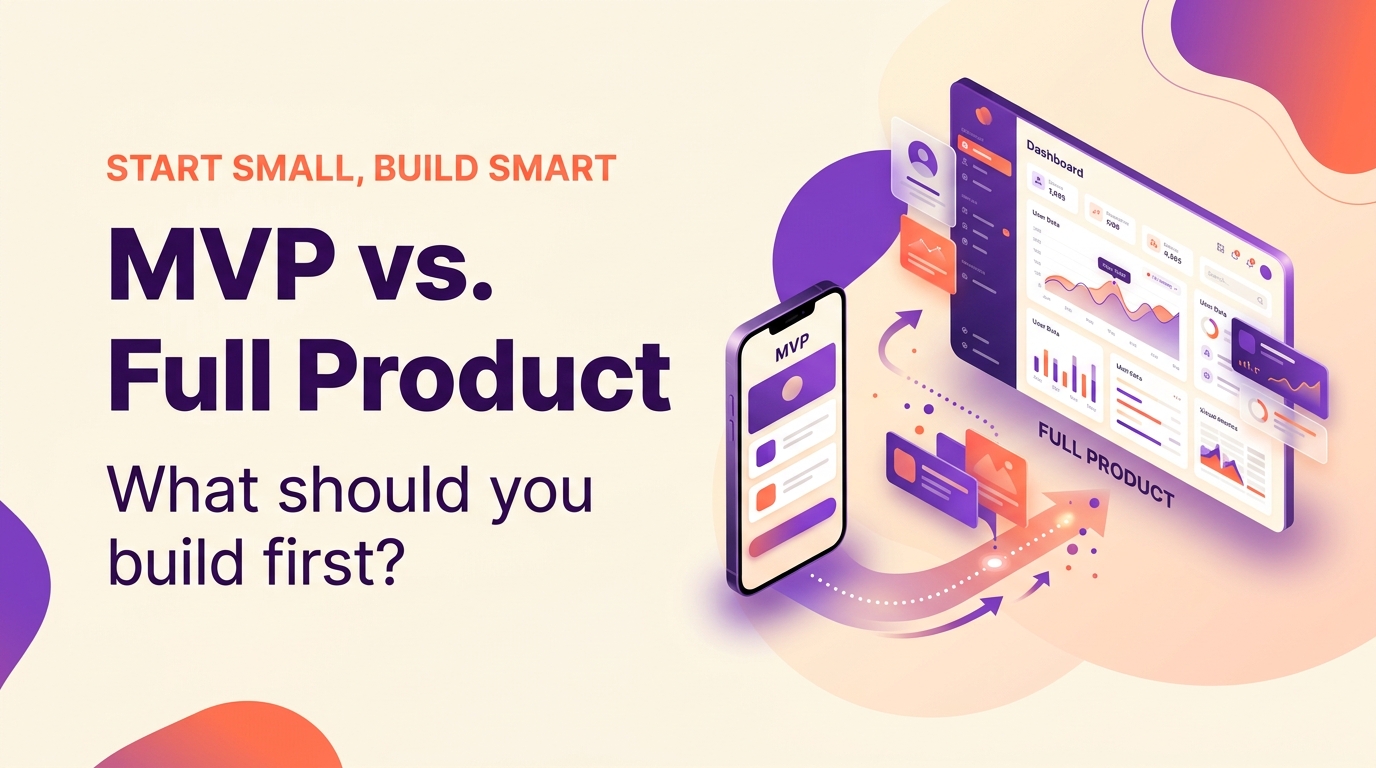
MVP vs. Full Product: What's the Difference?
MVP Full Product
Focuses on essential features Includes a broader feature set
Helps validate an idea Supports an established product vision
Usually requires less initial investment Requires a larger investment
Encourages early user feedback Builds on validated user needs
Designed to learn and improve Designed to deliver a more complete experience
An MVP is not simply a cheaper or poorly designed version of a full product.
It should still be reliable, usable, and built with a clear understanding of its purpose.
The difference is the scope, not the quality.
Why Startups Should Consider Building an MVP First
1. You Can Test Your Idea Earlier
Before investing heavily in development, you need to understand whether people actually need your product.
An MVP gives you an opportunity to introduce your idea to real users and learn from their behavior.
You may discover that customers love one feature but rarely use another.
That information can help you make better decisions about what to build next.
2. You Can Manage Your Budget Better
Every additional feature requires planning, design, development, and testing.
Building too many features before understanding your users can increase your initial investment unnecessarily.
Starting with the essentials allows you to focus your resources on the most important parts of your product.
3. You Can Improve Based on Real Feedback
It's easy to make assumptions about what users want.
But real feedback can reveal things you might not have considered.
Users may request a simpler workflow, a better dashboard, or an entirely different feature.
An MVP helps you learn from these insights and make improvements based on actual needs rather than assumptions.
When Should You Build a Full Product?
An MVP is a great starting point, but it isn't always the right choice for every project.
A more complete product may be necessary when:
- Your business already has established customer requirements.
- Your software needs several essential features to function properly.
- Your product operates in an environment with strict requirements.
- You have already validated your idea and understand your market.
- Your business needs a complete system to replace an existing workflow.
The right approach depends on your business goals, available resources, and product requirements.
How to Decide What Goes Into Your MVP
Before starting development, make a list of all the features you have in mind.
Then divide them into three categories:
Must-have: Features users need to solve the main problem.
Useful: Features that improve the experience but aren't essential for the first release.
Later: Features that can be added after gathering feedback.
For example, if you're building a task management app, creating and managing tasks might be essential. Advanced reports and team performance analytics could come later.
This simple approach helps you keep your first version focused.
Build Smart, Then Grow
A successful software product doesn't need to start with dozens of features.
It needs to solve a real problem for the right users.
An MVP helps you take the first step, learn from your audience, and improve your product with a clearer direction.
At GoTech Studio, we help businesses and startups plan and develop mobile apps and software around their actual needs.
Have a software idea but aren't sure where to begin? Visit https://gotechstudio.com/ and let's discuss how to turn your idea into a practical product.